Search products
 en
en 简体中文
简体中文 русский
 Español
Precision Manufacturing — Machining Notes
Two methods, one goal: cutting a perfect internal thread. The mechanism behind each one quietly decides your cycle time, your tap life, and your tolerance budget.
Rigid Tapping vs Synchronized Tapping: The Direct Answer
The short answer is this: rigid tapping delivers superior thread accuracy, faster cycle times, and longer tap life compared to synchronized tapping, because it electronically locks spindle rotation to Z-axis feed without relying on a mechanical tension-compression tap holder. Synchronized tapping, by contrast, uses a floating tap holder that absorbs small timing mismatches between spindle speed and feed rate, making it more forgiving on older machines but generally slower and less precise. Most modern CNC tapping center models built after 2015 use rigid tapping as the default mode, while synchronized tapping remains common on entry-level machines or as a backup mode when spindle encoder resolution is insufficient.
Understanding this distinction matters because it directly affects production throughput, tool consumption costs, and thread quality — three factors that determine whether a tapping center or a general-purpose CNC Milling Machine configured for tapping is the right investment for a given shop.
How Rigid Tapping Works
Rigid tapping, sometimes called "rigid rapid tapping," relies on the CNC controller synchronizing spindle rotation directly with Z-axis movement using closed-loop feedback from a high-resolution spindle encoder. The controller calculates the exact feed rate required per spindle revolution based on the thread pitch, then commands both axes to move in lockstep. There is no mechanical slip or float built into the tool holder — the tap is held rigidly, hence the name.
Key Requirements for Rigid Tapping
- A servo spindle with a high-resolution encoder, typically 1,000 pulses per revolution or higher
- A CNC controller capable of real-time spindle-to-feed interpolation
- A rigid or semi-rigid tap holder without significant axial compensation
- Ballscrews with minimal backlash to maintain positional accuracy during rapid direction reversal
Because the mechanical system does not need to absorb timing errors, rigid tapping allows for much faster reversal at the bottom of the hole — as little as 0.05 to 0.1 seconds on a dedicated cnc tapping center, versus 0.3 to 0.5 seconds on a synchronized system.
How Synchronized Tapping Works
Synchronized tapping, also known as "floating tapping," uses a specialized tap holder containing a spring-loaded or hydraulic mechanism that allows a small amount of axial float — usually between 2mm and 6mm — between the tool and the spindle. This float compensates for any mismatch between the programmed feed rate and the actual spindle rotation speed, which was historically necessary because older spindle drives and controllers could not achieve the precise real-time synchronization that modern servo systems provide.
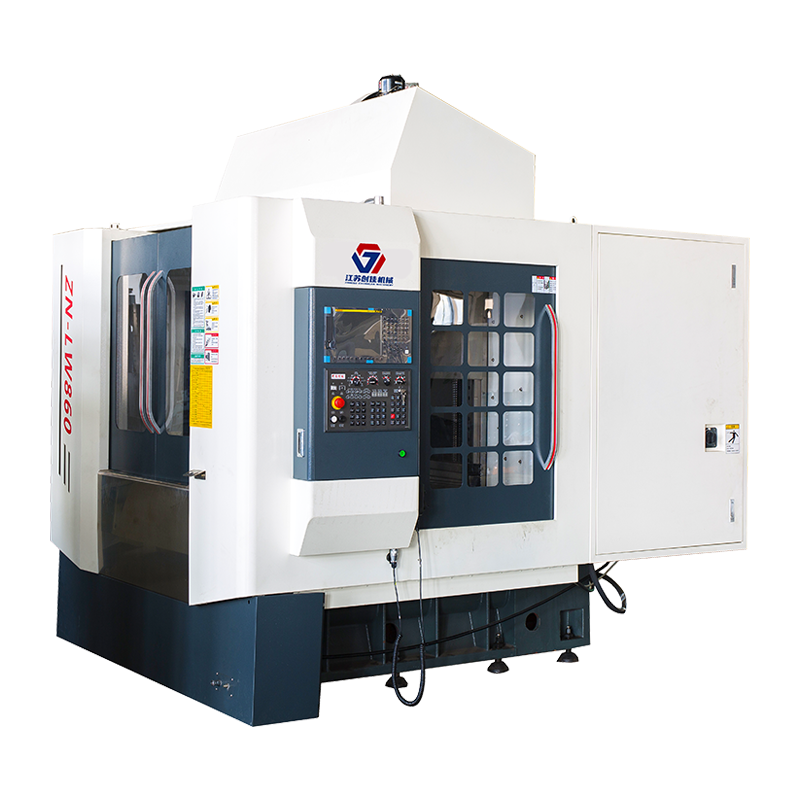
CNC tapping center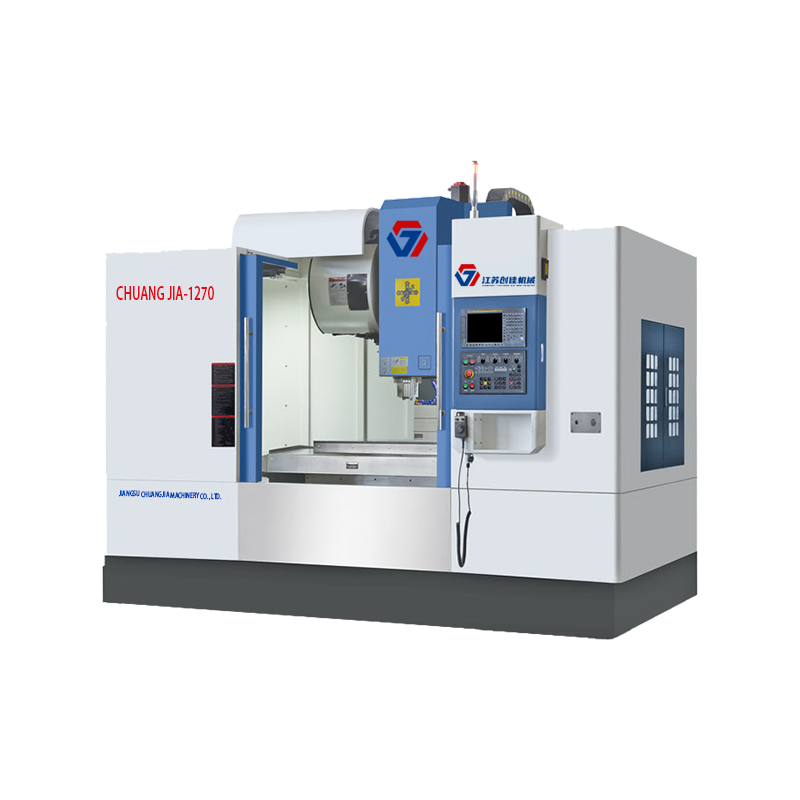
The floating tap holder essentially acts as a mechanical buffer. If the spindle is turning slightly faster or slower than the Z-axis feed dictates, the holder compresses or extends to absorb the difference, preventing the tap from being over-fed or under-fed into the material. This protects the tap from breakage but introduces a degree of imprecision in the resulting thread depth and pitch consistency.
Typical Use Cases for Synchronized Tapping
Synchronized tapping is still specified on some machines for a few practical reasons. Shops running older equipment without rigid tapping capability rely on it out of necessity. It is also sometimes preferred for tapping into blind holes in softer materials where a small margin of mechanical forgiveness reduces the risk of tap breakage during operator-programmed jobs that have not been fully optimized. Additionally, some manual retrofits of a general-purpose CNC Milling Machine for occasional tapping work use floating holders because upgrading the spindle drive and controller for full rigid tapping capability is not cost-justified for low-volume tapping needs.
Note
Floating tap holders offer a wide margin of mechanical safety, which is precisely why they remain popular for trial runs on unfamiliar materials.
Performance Comparison: Speed, Accuracy, and Tool Life
The performance gap between the two methods becomes clear when measured across three practical dimensions: cycle time, thread accuracy, and tap longevity. Below is a comparison based on typical production data from M6 tapping operations in mild steel, a common benchmark used across the industry.
| Performance Metric | Rigid Tapping | Synchronized Tapping |
|---|---|---|
| Average cycle time per hole | 1.2–1.8 seconds | 2.5–3.5 seconds |
| Thread pitch accuracy | ±0.01mm | ±0.03–0.05mm |
| Average tap life (holes before replacement) | 8,000–12,000 | 5,000–7,000 |
| Risk of tap breakage on mismatch error | Low with proper setup | Very low (mechanical buffer) |
These figures show that rigid tapping can reduce cycle time by roughly 40 to 50 percent compared to synchronized tapping, which translates directly into higher throughput on high-volume jobs. Over a production run of 50,000 holes, this time savings alone can amount to several hours of machine time, which is significant when calculating the return on investment for a dedicated tapping center.
Why Thread Quality Differs Between the Two Methods
Thread quality is not just about whether a fastener fits — it affects clamping force, fatigue resistance, and long-term joint reliability. Rigid tapping produces threads with more consistent pitch and minor diameter because the tap follows an exact, pre-calculated path with no mechanical compliance to introduce variation. This is especially important for aerospace, medical device, and precision automotive components where thread tolerances are tightly specified.
Synchronized tapping, by comparison, introduces a small but measurable variability because the float mechanism inherently allows the tap to lag or lead the ideal path by a fraction of a millimeter. In most general fabrication work, this variability falls within acceptable tolerance for standard Class 2B threads. However, for tighter Class 3A/3B threads or applications requiring repeatable torque-to-yield performance, rigid tapping is almost always the specified method.
Cost Considerations: Equipment, Tooling, and Maintenance
Rigid tapping capability generally adds cost to the initial machine purchase because it requires a higher-resolution spindle encoder and a more sophisticated controller. A dedicated cnc tapping center built specifically for high-speed rigid tapping can carry a price premium of 10 to 20 percent over an equivalent machine limited to synchronized tapping. However, this premium is frequently offset within the first one to two years of operation through reduced tap consumption and faster cycle times.
Tooling Cost Comparison
Floating tap holders required for synchronized tapping typically cost between $80 and $200 each and have internal springs or hydraulic components that wear out over time, requiring periodic rebuilding or replacement. Rigid tap holders are simpler, often costing $30 to $60, and have essentially no wear parts beyond the collet itself. Over a production year involving multiple tap holders across different thread sizes, this difference in tooling investment and maintenance adds up meaningfully.
- Initial machine cost: higher for rigid tapping capability
- Tap holder cost: lower for rigid tapping, higher for synchronized tapping
- Tap replacement frequency: lower for rigid tapping due to consistent load distribution
- Downtime for holder maintenance: higher for synchronized systems with mechanical float components
Return on Investment
The higher upfront cost of rigid tapping capability is typically recovered through reduced tap consumption and faster cycle times within the first one to two years.
When Synchronized Tapping Still Makes Sense
Despite its performance disadvantages, synchronized tapping is not obsolete. It remains a practical choice in several scenarios. Shops operating older machines that were never designed with high-resolution spindle encoders cannot easily retrofit rigid tapping without a significant controller upgrade, making synchronized tapping the only viable option. Low-volume job shops that tap only occasionally, perhaps as a secondary operation on a general-purpose CNC Milling Machine, may find that the cost of upgrading to rigid tapping capability is not justified by the volume of work involved.
Additionally, synchronized tapping offers a built-in safety margin for operators who are still fine-tuning feed and speed parameters for a new material or tap style. The mechanical float acts as a forgiving buffer during the trial phase of a new job, reducing the risk of a costly tap breakage inside an expensive workpiece before the program has been fully validated.
Caution
Retrofitting an older machine for full rigid tapping capability without upgrading the spindle drive and controller can lead to inconsistent thread results rather than the intended precision gain.
Choosing the Right Method for Your Production Needs
The decision between rigid and synchronized tapping should be based on production volume, thread tolerance requirements, and existing equipment capability. For high-volume production environments tapping thousands of holes per shift, rigid tapping is almost always the more economical and higher-quality choice despite the higher upfront equipment cost. For low-volume, mixed-operation shops where tapping is a secondary task performed occasionally, synchronized tapping on existing equipment can remain a cost-effective solution.
Questions to Ask Before Deciding
- What is the expected monthly tapping volume, and how does that compare to the cycle time savings rigid tapping offers?
- What thread class tolerance does the application require?
- Does the current spindle and controller support real-time encoder feedback needed for rigid tapping?
- What is the total cost of tooling replacement over a 12-month period under each method?
Answering these questions with actual shop-floor data, rather than assumptions, provides the clearest path to selecting the tapping method that delivers the best balance of speed, quality, and cost for a given production environment.
Final Takeaway
Rigid tapping and synchronized tapping both accomplish the same basic goal — cutting internal threads with a CNC-controlled tap — but they arrive at that goal through fundamentally different mechanisms with measurably different results. Rigid tapping wins on speed, thread accuracy, and long-term tooling economy, making it the standard choice on modern high-throughput tapping centers, while synchronized tapping continues to serve a legitimate role on older equipment and in lower-volume operations where mechanical forgiveness outweighs the need for maximum cycle efficiency. Evaluating actual production volume and thread tolerance requirements, rather than defaulting to whichever method a machine happens to support, is the most reliable way to match the tapping process to the job at hand.